Artrepeneur
A fragrance can be remarkably efficient at collapsing time. One note can retrieve a room, a person, a city, an entire period of life before the wearer has found the language to describe what has returned. Alex Flores has built Dos Mundos around that phenomenon. His fragrances begin less with the conventions of perfumery than with the material of lived experience: a word exchanged within a family, the character of a city after dark, the movement between jazz and reggaeton over the course of a night. What distinguishes Dos Mundos is Flores’ ability to recognize narrative in those details and give them form. “I love when someone picks up a perfume, they spray it, and a memory unlocks in their head,” he says. The product matters, but it is rarely the beginning of the story. Flores starts with memory, culture and place, then asks what a fragrance might preserve from them.
The name Dos Mundos comes from a question Flores carried for much of his life. Raised in Chicago’s Little Village while regularly traveling between the United States and Mexico, he once wondered whether he was living two separate lives. Age gave him a different interpretation. “It wasn’t about living two worlds,” he says. “It was about being part of two worlds and having access to both.” The distinction became the conceptual foundation of the company. Dos Mundos is rooted in Latin American identity, but Flores is careful not to make identity synonymous with ethnicity alone. “It could be the two emotions you’re battling, the two careers you’re battling. Everybody’s between something.” What he is describing is a contemporary condition that luxury has not always represented particularly well: people who belong to several cultural, geographic or social realities at once. Dos Mundos does not attempt to resolve that multiplicity. It treats it as the source material.


Cariño, the house’s newest fragrance, demonstrates the precision of that approach. The word is familiar throughout Latin America, but difficult to flatten into a single English equivalent. It can signal affection between partners, parents and children, grandparents, friends, neighbors and even within the casual intimacy of everyday relationships. “People often think of cariño as a relationship type of word,” Flores says. “But what does it look like between you and your stylist? What does it look like between you and your neighbor? Between you and your grandmother?” For Flores, the word is also deeply personal. It is something his mother calls him, and something he now calls his own daughter, creating a small thread of language that moves from one generation to the next. Rather than turning that memory into a literal olfactory illustration, Flores built a fragrance that opens fresh and floral before settling into the warmth of tonka bean, leaving enough ambiguity for someone else to complete the association.
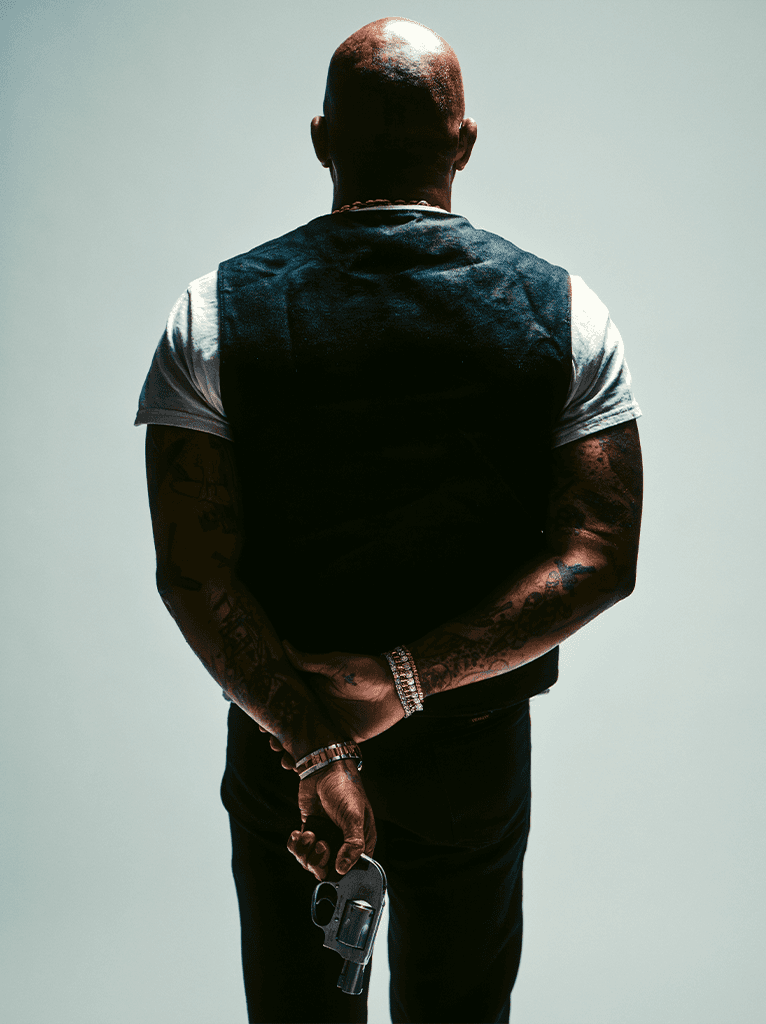
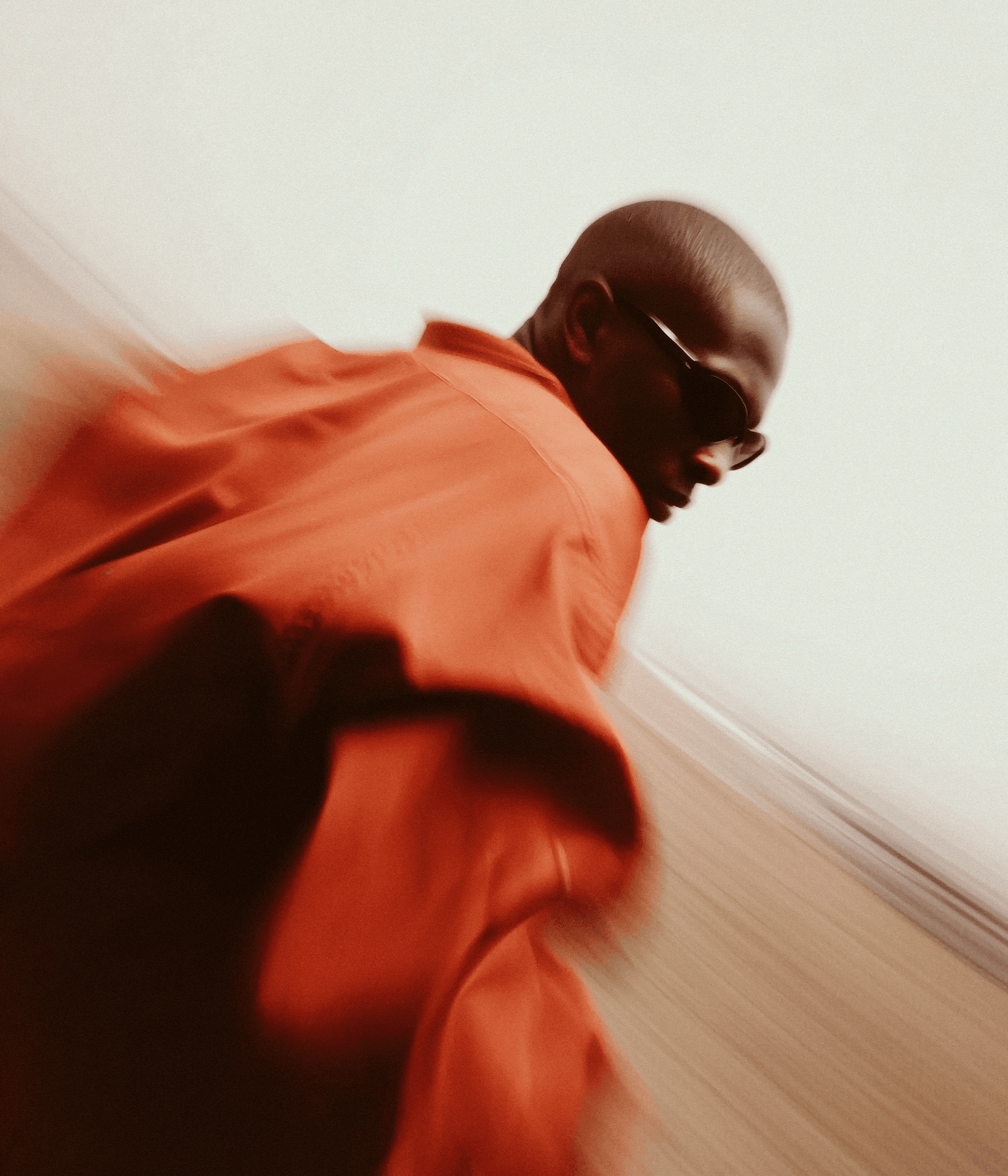
The same philosophy governs the imagery surrounding the product. Flores is not interested in using Latin America merely as atmosphere. He has assembled collaborators whose cultural perspectives materially shape the campaigns, including Venezuelan photographer Silvana Trevale and a broader creative team connected to Latin America and its diaspora. “They have their own story. They have their own perspective, and they’re vocal about it,” he says. That authorship matters because representation in fashion and beauty has often been treated as a question of casting, while the visual systems around those faces remain largely unchanged. Dos Mundos works differently. Its Latin identity is present not only in who appears in an image, but in who constructs it, critiques it and decides which moments are worth recording. The early campaigns were photographed in Mexico City, with Flores envisioning future work across Puerto Rico, Colombia and elsewhere in the region. The goal is not a generalized image of Latinidad, but a growing archive of distinct places and perspectives treated with the seriousness typically reserved for more established luxury narratives.
Flores’ instinct for building those worlds is inseparable from his design background. He grew up on Chicago’s South Side, where magazines offered an early education in visual culture and Photoshop became a tool of experimentation by the time he was twelve. He later studied industrial design, earned a master’s degree in design, taught graphic design in Chicago high schools and moved into digital products and entrepreneurship. The mediums changed; his way of thinking did not. “From industrial design to apps and now to perfume, those are different products, different ways of designing, but it’s all the same,” he says. “You start with an idea. Then you work with developers, engineers or manufacturers.” Fragrance has simply given him a more complex system to orchestrate. A bottle has to function as an object. A campaign has to communicate without overexplaining. A scent has to deliver on the world created around it. And the company supporting all of it has to make economic sense. Flores increasingly describes himself with a word broad enough to contain those disciplines: “I’m a builder.”



Building Dos Mundos took four years, and Flores is unusually candid about how inelegant much of that process was. Development began in 2022; the company did not formally launch until 2026. Labels failed to adhere. Caps did not fit. Bottle dimensions were wrong. Packaging contained mistakes. Money spent with an early perfumer produced work he ultimately abandoned. “Dos Mundos is made from failures, honestly,” he says. What is more instructive is how little mythology he attaches to those failures. Flores treats them as operational problems rather than existential ones. “You could have a short term solution, a mid term solution and a long term solution,” he says. That mindset runs counter to a particular creative instinct: the belief that an idea should remain private until every element perfectly resembles the version in one’s head. Flores still knows what he wants Dos Mundos to look like five years from now. He simply refuses to confuse that future state with the requirements of the present. “It has to be real,” he says. “They have to touch it. They have to spray it. They have to be on the shelves.”
Flores is equally deliberate about where Dos Mundos lives. The brand is now carried by more than twenty retailers in the United States, yet Flores says he rejects considerably more opportunities than he accepts. “I’m saying no more than I’m saying yes,” he says, estimating the ratio at roughly seventy percent. For a young brand, restraint can appear counterintuitive; revenue and visibility are difficult things to decline. Flores views distribution differently. A fragrance does not arrive in a cultural vacuum. The store carrying it, the products beside it and the customer discovering it there all contribute to its positioning. Growth, then, becomes a question of coherence rather than simple reach. That consideration is beginning to meet a much larger audience. Dos Mundos was featured in Vogue México’s September 2026 issue, while the brand has found an increasingly vocal following across TikTok and Instagram, particularly within the Latin community. Much of that response has been organic, with people sharing the fragrances, campaigns and stories because they recognize something familiar in them. Flores’ selection for Ulta Beauty’s 2026 MUSE Accelerator Cohort is providing further grant support as the company develops additional fragrances, while outside investors have begun expressing interest.
Its first three fragrances already suggest the beginnings of a larger cultural vocabulary. Mérida Nights draws from Mérida, Yucatán, where Flores became fascinated by the way the city transforms after sunset, once the intensity of the daytime heat begins to loosen its grip. The fragrance carries that transition through rustic warmth and sweetness. Saoco Jazz emerged from time in Colombia and the ease with which an evening could move from the restraint of a jazz bar into reggaeton hours later. “Somehow, everything ends up into a reggaeton type party at two in the morning,” Flores says. Cariño takes something less geographic but equally specific, a word of affection, and turns it into an emotional framework. Future fragrances will push beyond personal recollection into archives, cultural history and periods of activism. “It’s not just what’s happening now,” Flores says. “It could draw from historical moments, from periods when activism and cultural expression took different forms.” Taken together, the ambition starts to look less like a conventional fragrance assortment and more like an evolving record of Latin American experiences translated through scent.
That is where Dos Mundos has the potential to contribute something genuinely different to the category. Flores is working with identities, memories and cultural references that have not always been granted the same vocabulary of refinement as their European counterparts, but he is not interested in simply placing them inside an existing definition of luxury. He is constructing his own context around them. The everyday becomes worthy of study: a word of affection passed between generations, a city waking after sundown, a night moving between musical worlds, a childhood divided between countries but eventually understood as belonging to both. “Dos Mundos is Alex Flores. That story holds true to my heart,” he says. “But there are thousands of people resonating with this now. There’s more than my story.” That may be the most consequential shift for the company. Flores began with the details of his own life; he is now building a fragrance house capable of treating those details as part of a much larger cultural record, and of giving identities rarely centered in the category the space to define sophistication on their own terms.